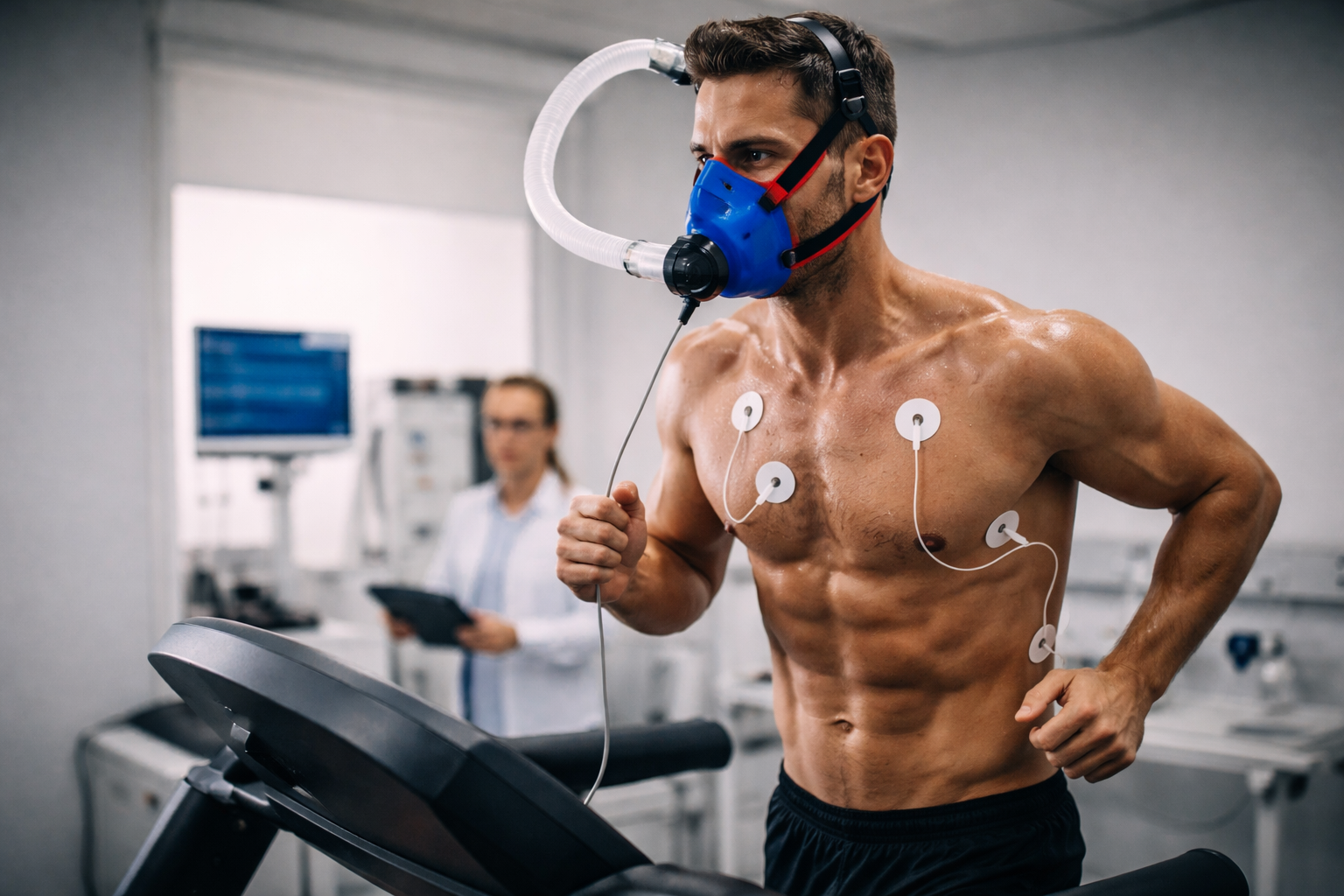
What Is VO2max and Why Does It Determine Your Running Performance?
VO2max is the maximum amount of oxygen your body can consume and use during intense exercise. It's expressed in milliliters of oxygen per kilogram of body weight per minute (ml/kg/min). Along with running economy and lactate threshold, it's one of the three pillars of running performance — and the one most strongly correlated with your potential as a distance runner.
A high VO2max means you can deliver more oxygen to your muscles and sustain faster paces for longer.
Reference values for runners:
| Level | VO2max (ml/kg/min) |
|---|---|
| Beginner | 35–45 |
| Trained amateur | 50–60 |
| Advanced amateur | 60–70 |
| Elite (male) | 70–85 |
Can You Improve Your VO2max Running?
Yes, significantly. While VO2max has a strong genetic component (40–50% according to twin studies), training can increase it by 15–25% in individuals with a low base and 5–10% in already trained runners.
The good news: the methods to improve VO2max are well-documented and accessible for any amateur runner. You don't need a lab or an elite coach.
The 3 Most Effective Methods to Improve VO2max
1. VO2max Intervals: The Norwegian 4×4 Protocol
The most studied protocol for improving VO2max. Developed by physiologist Jan Helgerud at the Norwegian University of Science and Technology:
- 4 sets of 4 minutes at 90–95% of maximum heart rate
- 3 minutes of active recovery between sets (easy jog)
- Frequency: twice per week
Helgerud's studies showed VO2max improvements of 10% in 8 weeks with this protocol in amateur runners. It's the most efficient stimulus per unit of time for increasing maximal oxygen uptake.
What pace? You should finish each set at the limit — able to hold on but unable to sustain the pace more than a few extra seconds.
2. Short Intervals: 30/30 and 60/60 Series
A more manageable alternative for runners with less base or returning from a break:
- 30 seconds at maximum sustainable intensity (≈ 3K–5K pace)
- 30 seconds easy recovery
- 12–20 repetitions per session
- Also available in 60/60 format for greater total work volume
The advantage: accumulated cardiovascular stress is similar to the 4×4 but perceived effort is lower, which improves adherence.
3. Long Runs at Elevated Aerobic Intensity
Aerobic volume also improves VO2max, especially in less trained runners. Running 60–75 minutes while maintaining a heart rate in zone 3 (70–80% HRmax) produces significant aerobic adaptations.
It's not the fastest method to improve VO2max, but it's sustainable long-term and reduces injury risk. It works particularly well combined with one weekly interval session.
The Most Overlooked Factor for Improving VO2max: Weekly Volume
Studies show the biggest individual predictor of VO2max in amateur runners isn't training intensity — it's weekly mileage. Going from 30 km/week to 60 km/week can improve VO2max more than adding an interval session.
Intensity is the catalyst. Volume is the foundation everything is built on.
How Long Does It Take to Improve VO2max?
With structured and consistent training:
- 4–6 weeks: first neuromuscular adaptations
- 8–12 weeks: measurable VO2max improvements of 5–10%
- 6–12 months: deep structural adaptations — larger cardiac volume, greater muscle capillary density
Patience is part of the method. VO2max improvements aren't linear: there will be weeks where the watch shows no change while the body adapts structures that aren't visible.
How to Measure VO2max Without a Lab
Most modern GPS watches (Garmin, Polar, COROS) estimate VO2max from heart rate and pace. It's not as precise as a laboratory stress test, but it's useful for tracking the trend over weeks and months.
A simple, free alternative: the Cooper test (maximum distance in 12 minutes of running). The formula (distance in meters − 504.9) / 44.73 gives a reasonable VO2max estimate.